7 Examples of 50/50 Custody Schedules for 2025
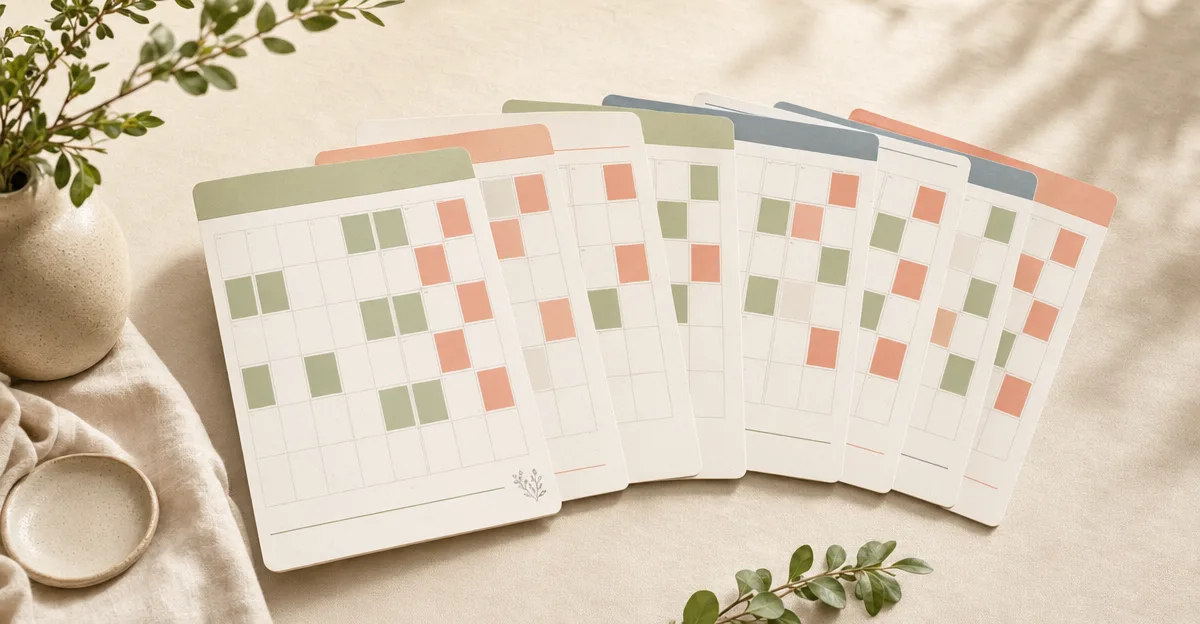
Navigating co-parenting can be complex, but establishing a fair and consistent custody schedule is the cornerstone of a successful arrangement. A 50/50 split ensures children maintain strong relationships with both parents, but what does that look like in practice? The term '50/50' encompasses a variety of structures, each with unique benefits and challenges that directly impact family life.
Choosing the right one depends on your children's ages, your work schedules, the distance between homes, and your co-parenting dynamic. This guide provides a deep dive into seven distinct examples of 50 50 custody schedules, moving beyond simple descriptions to offer strategic analysis.
We will break down the mechanics of each plan, analyze the pros and cons from a child's perspective, and offer actionable strategies to make implementation smoother. Our goal is to equip you with the insights needed to select and customize a schedule that works best for your family.
1. Week-On, Week-Off Schedule
The week-on, week-off schedule is often considered the cornerstone of 50/50 custody arrangements due to its straightforward structure and predictability. In this model, the child lives with one parent for a full seven days and then switches to the other parent's home for the next seven days.
This schedule is one of the most popular examples of 50 50 custody schedules because it minimizes the "suitcase life" for children, giving them a full week to feel established in each home.
Strategic Breakdown
- Best For: School-aged children and teenagers who can comfortably handle being away from one parent for a week. Also suits co-parents who live in the same school district.
- Potential Challenges: For younger children, a full week away from one parent can feel like an eternity. High-conflict co-parents may find the long breaks in communication challenging.
Key Insight: To mitigate the long separation, many parents modify this schedule with a mid-week dinner visit or a video call.
Actionable Takeaways
- Establish a Clear Exchange Protocol: Decide on a consistent day, time, and location for the exchange.
- Utilize Shared Digital Tools: Use a shared calendar app to track the schedule, appointments, and school events.
- Duplicate Key Items: Keep essentials like toothbrushes, pajamas, and favorite toys at both homes.
2. 2-2-3 Rotating Schedule
The 2-2-3 rotating schedule is a dynamic arrangement designed for parents who want their children to have frequent contact with both of them. The child spends two days with Parent A, two days with Parent B, and then a three-day weekend with Parent A. The following week, the schedule flips.
This rotation ensures a child never goes more than a few days without seeing each parent.
Strategic Breakdown
- Best For: Toddlers, preschoolers, and early elementary-aged children who benefit from seeing both parents regularly. Also works well for co-parents who live very close to one another.
- Potential Challenges: The frequent transitions can be disruptive. It requires a high level of organization and cooperation.
Key Insight: To minimize the disruption of exchanges, align them with school or daycare.
Actionable Takeaways
- Use a Detailed Shared Calendar: A custody app or shared digital calendar is non-negotiable for this schedule.
- Pack a "Transition Bag": Keep a dedicated bag ready with essentials for the next few days.
- Establish Ironclad Routines: Stick to the exact same pickup and drop-off times and locations.
3. 3-4-4-3 Schedule
The 3-4-4-3 schedule is a rotating two-week plan. The child spends three days with Parent A and four days with Parent B in the first week. The following week, the schedule flips: four days with Parent A and three with Parent B.
Strategic Breakdown
- Best For: Elementary-aged children who benefit from seeing both parents in a single week but are old enough to handle a few days of separation.
- Potential Challenges: The inconsistency of the exchange days can be confusing without a clear calendar.
Key Insight: To simplify the rotation, assign fixed days for each parent's shorter and longer blocks.
Actionable Takeaways
- Create a Visual Calendar: Color-code each parent's days so children can easily see where they will be.
- Standardize Exchange Logistics: Designate fixed times and locations for exchanges.
- Plan for Activities in Advance: Use a shared app to coordinate who is responsible for homework, practices, and appointments each week.
4. Alternating Weeks with Midweek Visit
This retains the stability of seven-day blocks but adds a brief, scheduled visit or overnight with the other parent during the middle of the week.
Strategic Breakdown
- Best For: School-aged children who benefit from weekly consistency but still need regular contact with both parents.
- Potential Challenges: Coordinating a midweek visit requires more logistical planning.
Key Insight: Frame the midweek visit as a low-pressure check-in, not another major transition.
Actionable Takeaways
- Define the Midweek Exchange Clearly: Specify the exact day, time, and format.
- Keep School Items at Both Homes: To make midweek overnights easier, ensure both parents have copies of textbooks and school supplies.
- Be Flexible When Necessary: Agree to be flexible during demanding times like exam weeks.
5. 2-2-5-5 Schedule
The 2-2-5-5 schedule has the child spend two days with Parent A, two days with Parent B, five days with Parent A, and then five days with Parent B. This repeats every two weeks.
Don't draw this on graph paper. Kidtime ships with all of the schedules above as built-in templates — including 2-2-5-5 and 4-3-3-4. Pick your template, set the start date, and the calendar fills in years of handoffs in seconds. Free tier covers it.
Strategic Breakdown
- Best For: Children of all ages who benefit from seeing both parents regularly but also thrive with longer, uninterrupted periods.
- Potential Challenges: The rotating nature can be confusing at first.
Key Insight: Consistency in the exchange days is paramount. For example, Parent A always has Monday/Tuesday, and Parent B always has Wednesday/Thursday.
Actionable Takeaways
- Use a Visual, Color-Coded Calendar: Assign each parent a color to visually map out the two-week rotation.
- Plan Around the 5-Day Blocks: Treat the five-day stretches as opportunities for bigger activities.
- Streamline Transitions: Create a streamlined "transition bag" with essentials.
6. Alternating Months
The child lives with one parent for an entire month before switching to the other parent's home for the next month.
Strategic Breakdown
- Best For: Military families with deployment cycles, parents with seasonal jobs, or co-parents who have moved to different cities or states. Generally works better for older children.
- Potential Challenges: The long periods apart can be extremely difficult for younger children.
Key Insight: Consistent and creative communication is non-negotiable. Schedule daily video calls and send care packages.
Actionable Takeaways
- Establish a Robust Communication Plan: Agree on a daily time for video or phone calls.
- Coordinate Schooling and Activities: Work closely with the child's school to ensure both parents receive communications.
- Plan High-Quality Parenting Time: Make each month count by planning special activities.
7. 4-3 Split Week Schedule
The child spends four days with one parent and three days with the other. To achieve a 50/50 split, the parent who has the four-day block alternates each week.
Strategic Breakdown
- Best For: Younger school-aged children who benefit from seeing both parents each week. Works well for co-parents who live relatively close.
- Potential Challenges: The recurring mid-week handoff can be disruptive.
Key Insight: Anchor the schedule to the school week to minimize disruption.
Actionable Takeaways
- Define the "Weekend": Clearly establish which days constitute the three-day and four-day blocks.
- Synchronize Household Rules: Have similar rules for homework, screen time, and bedtimes at both homes.
- Plan Exchanges Carefully: Choose an exchange location and time that minimizes stress.
7 Examples of 50/50 Custody Schedules Comparison
| Schedule | Implementation Complexity | Resource Requirements | Expected Outcomes | Ideal Use Cases | Key Advantages |
|---|---|---|---|---|---|
| Week-On, Week-Off | Low - simple weekly rotation | Moderate - shared calendars, duplicated items | Stable routines, minimal transitions | School-aged children, steady routines | Minimal transitions, easy to follow |
| 2-2-3 Rotating | High - complex 7-day rotating pattern | High - detailed coordination, custody apps | Frequent parent contact, no long gaps | Younger children, parents with flexible schedules | Frequent contact, balanced weekend time |
| 3-4-4-3 | Medium - two-week cycle | Moderate - calendar tracking | Balanced time over 14 days | School-age children, activity planning | Longer stability periods, weekend rotation |
| Alternating Weeks with Midweek Visit | Medium - week-on/off plus midweek visit | Moderate - coordination for midweek logistics | Combines stability with frequent contact | Parents seeking compromise, homework help | Reduces separation, maintains routine |
| 2-2-5-5 | High - complex 14-day rotation | High - color-coded calendars, frequent communication | Mix of stability and frequent contact | Families needing frequent contact and routine | Balances contact with stability |
| Alternating Months | Low - simple monthly blocks | Low - minimal transitions, communication tools | Deep bonding, few transitions | Long-distance co-parenting, seasonal work | Very few transitions, deep routine |
| 4-3 Split Week | Medium - weekly 4-3 splits, two-week cycle | Moderate - scheduling coordination | Weekly contact, shorter separations | Maintaining school/activity involvement | Consistent weekly contact, predictable |
Choosing and Implementing the Right Schedule for Your Family
Selecting the right co-parenting arrangement is a foundational step in building a stable, post-separation family structure. It's far more than just dividing time; it's about crafting a new rhythm that supports your children's emotional and developmental needs while respecting the practical realities of two separate households.
Key Takeaways for Success
- Child's Age and Temperament: Younger children often benefit from schedules with frequent parent-child contact, like the 2-2-3 or 2-2-5-5. Older children and teens may prefer the longer, more stable blocks of the Week-On, Week-Off schedule.
- Logistical Feasibility: Your proximity to your co-parent and the demands of your respective careers are critical factors.
- Flexibility is Non-Negotiable: The ability to adapt your schedule for special events, illnesses, or changing needs without generating conflict is the hallmark of a healthy co-parenting dynamic.
Actionable Next Steps to Move Forward
- Initiate an Open Dialogue: Schedule a dedicated, calm time to discuss these options with your co-parent.
- Create a "Test Drive" Plan: Consider trying a schedule for a trial period, such as one or two months.
- Document Everything in Detail: Your final plan should explicitly outline exchange times and locations, holiday rotations, and procedures for handling scheduling changes.
Stop juggling messy texts, conflicting calendars, and stressful handoffs. Kidtime lets you implement any of the 50/50 schedule templates above in seconds — pick the template, set a start date, done. Auto-generated custody analytics show how the actual time split is tracking against the plan over months. AI Tone Scan in chat keeps the heat down, and unalterable communication records keep things on the record when they need to be. Free tier covers the calendar and templates; premium adds analytics, AI Tone Scan, and attorney portal access (with a 7-day trial). Download on the App Store or Google Play.